Top Free Spanish eBook Resources for Parents with Young Children
- Jun 27
- 5 min read
Updated: Jul 19
Looking for Free Spanish Books for Kids? Start Here!

If you're raising a bilingual child, homeschooling, teaching Spanish, or simply want your child to practice reading in Spanish, finding free, high-quality Spanish books can feel overwhelming.
In this guide, I've rounded up my favorite websites with FREE Spanish books for kids, including the recommended ages, and Spanish proficiency levels (CEFR). By the end of this article, you'll know exactly where to find books that match your child's age and Spanish level—without spending a penny.
Table of Contents
Why Your Child's Spanish Level Matters
One of the biggest mistakes parents make when choosing Spanish books is focusing only on their child's age.
A 7-year-old who is just beginning to learn Spanish needs very different books than a 7-year-old who has been speaking Spanish since birth. Choosing books that match your child's Spanish reading level—not just their age—helps keep reading fun instead of frustrating.
If a book is too easy, your child may lose interest. If it's too difficult, they may become discouraged and avoid reading altogether.
That's why you'll see a CEFR level listed for each website in this guide. The Common European Framework of Reference for Languages (CEFR) is an internationally recognized system used to describe language proficiency. It makes it much easier to choose books that your child can understand while still introducing new vocabulary and helping them grow as readers.
If you've never heard of CEFR before, don't worry! Here's a simple guide.
Understanding Spanish Reading Levels (CEFR)
Not sure what CEFR level your child is at?
We can help. Book a free trial class and I’ll assess your child’s Spanish level and recommend the right books and learning path for them.
Pre-A1 – Just Beginning
Best for:
Preschoolers
Children with little or no Spanish
Kids learning their first Spanish words
Children at this stage are just starting their language journey. Look for books with repetitive phrases, simple vocabulary, predictable patterns, and lots of colorful illustrations. Books that include audio are especially helpful because children can hear correct pronunciation while following along.
You'll typically see:
One short sentence per page
Everyday vocabulary
Lots of picture support
Repetition that builds confidence
A1 – Early Readers
At the A1 level, children begin recognizing familiar words and simple sentence patterns. They can understand short stories about everyday topics and start reading more independently, especially with adult support.
You'll typically see:
Short paragraphs
Simple conversations
Familiar themes like family, animals, food, and school
Basic verbs and common expressions
A2 – Growing Readers
Children at the A2 level are ready for stories with more detail and richer vocabulary. They can follow longer plots and enjoy books that include dialogue, humor, and simple chapter books.
This is often the stage where reading becomes much more enjoyable because children can understand complete stories rather than just isolated words or sentences.
You'll typically see:
Longer stories
More dialogue
Expanded vocabulary
Early chapter books
B1 – Confident Readers
By the B1 level, children can read independently with much less support. They're able to understand longer narratives, more developed characters, and a wider variety of topics.
Books at this level are ideal for upper elementary and middle school students who have built a solid Spanish foundation.
You'll typically see:
Longer chapters
Richer vocabulary
More complex plots
Books that encourage critical thinking
B2 – Advanced Young Readers
Children reading at the B2 level can enjoy novels and more sophisticated texts written for older children and teenagers. They can understand figurative language, more advanced grammar, and a wide range of vocabulary.
If your child has reached this level, they're ready to explore many authentic books written for native Spanish-speaking readers.
You'll typically see:
Full-length novels
Teen fiction
Historical fiction
Fantasy and adventure series
More advanced nonfiction
Now that you have a better understanding of the different Spanish reading levels, let's explore some of the best websites where you can find FREE Spanish eBooks for every stage—from preschoolers just learning their first words to teenagers reading
Best for
Ages 3–10
Spanish Level
Pre-A1
A1
A2
What you'll find
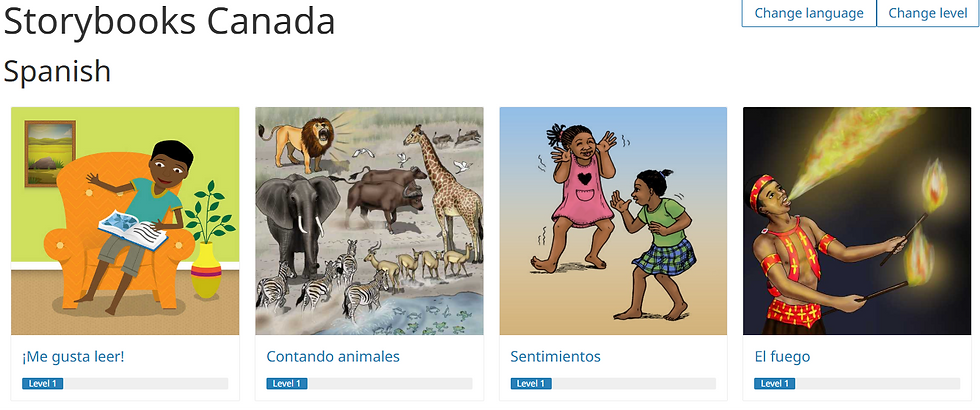
Storybooks Canada offers beautifully illustrated children's books translated into Spanish and many other languages. Many stories include audio narration, making them perfect for beginning Spanish learners.
Great for
Beginning readers
Bilingual families
Listening and reading together
Vocabulary building
Best for
Ages 3–8
Spanish Level
Pre-A1
A1
What you'll find
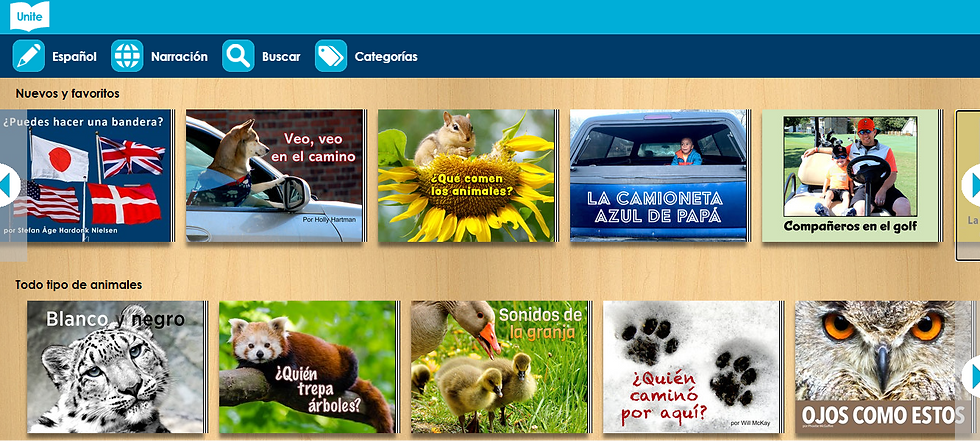
This website offers simple fiction and nonfiction books with colorful illustrations. Every book includes the option to listen to the story read aloud in Spanish by a native speaker, making it ideal for children who are just starting their Spanish journey.
Great for
Early literacy
Vocabulary development
Independent reading

Best for
Ages 5–10
Spanish Level
A1
A2
What you'll find
Classic fairy tales translated into easy-to-understand Spanish, many with accompanying audio. Children can enjoy familiar stories while building confidence in Spanish.
Great for
Reading fluency
Listening practice
Family read-alouds
Best for
Ages 4–12
Spanish Level
A1
A2
B1
What you'll find
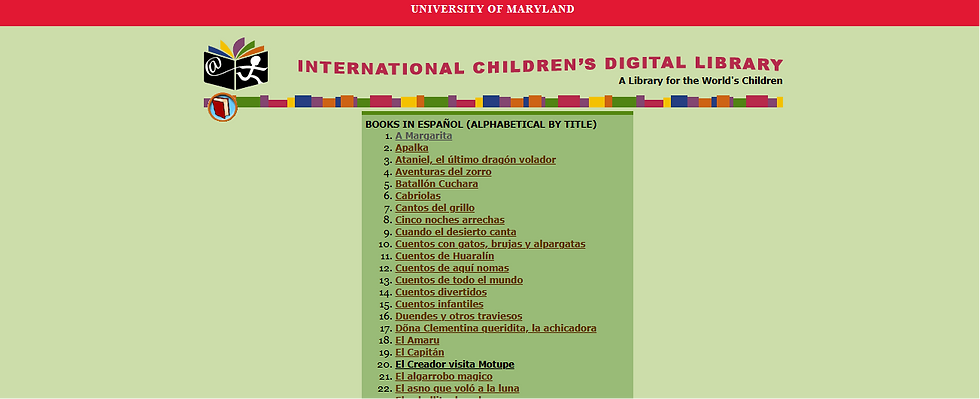
One of the largest collections of free digital children's books from around the world. You can browse books in Spanish by age, length, genre, and reading level.
Great for
Diverse stories
Cultural exploration
Classroom or homeschool use
Independent readers
Best for
Ages 3–8
Spanish Level
Pre-A1
A1
What you'll find
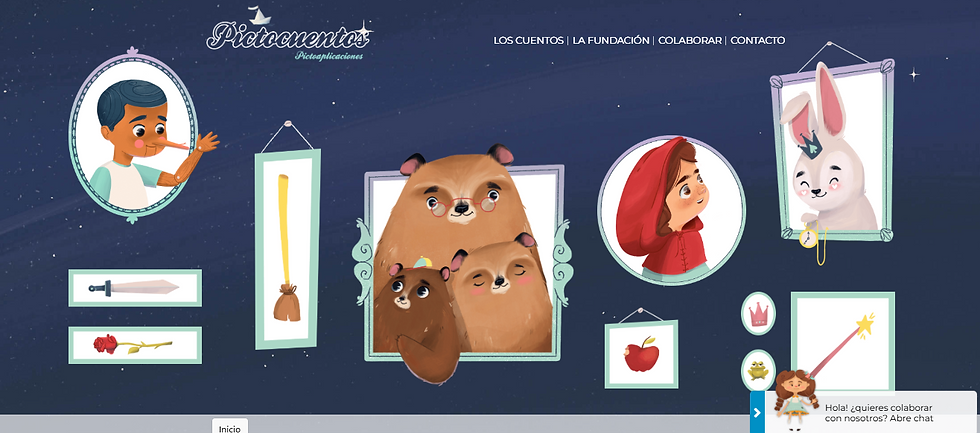
Pictocuentos uses pictograms (simple images that support the text) to help children understand stories. It's especially helpful for beginning readers, Spanish learners, and visual learners.
Great for
Preschoolers
Emerging readers
Children learning Spanish as a second language
Visual supports for reading comprehension

Best for
Ages 3–8
Spanish Level:
Pre-A1
A1
What you'll find
Storyplace offers free interactive Spanish storybooks with colorful illustrations, simple animations, and read-aloud narration. The stories are designed for young children and make reading feel engaging and playful while reinforcing basic vocabulary and listening skills.
Great for
Preschool and early elementary children
Listening comprehension
Beginning Spanish learners
Interactive storytime
Building confidence with simple Spanish books
Best for
Ages: 3–12
Spanish Level:
Pre-A1
A1
A2
B1
What you'll find
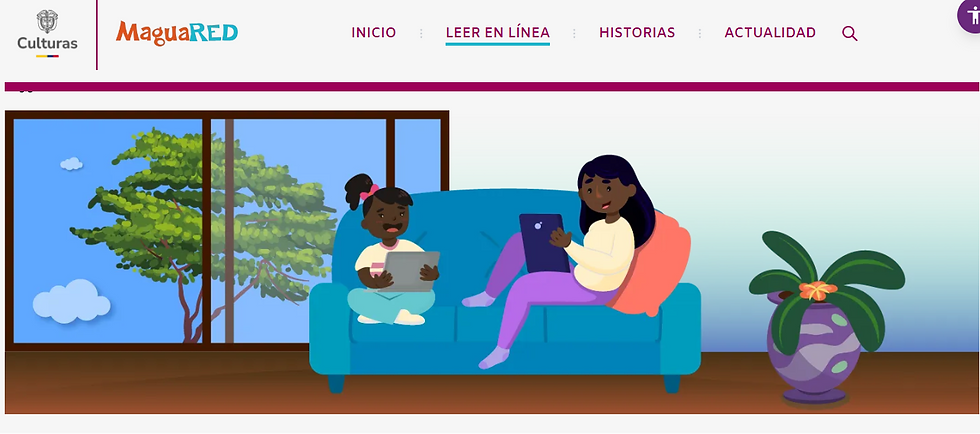
Maguaré's Leer en Línea collection features beautifully illustrated digital books by Colombian authors and publishers. The stories celebrate Latin American culture, nature, family, and imagination, making them an excellent resource for children who want to enjoy authentic Spanish literature while expanding their vocabulary.
Great for
Authentic Spanish children's literature
Exploring Colombian and Latin American culture
Family read-alouds
Homeschooling and classroom use
Developing reading comprehension
Reading in Spanish Doesn't Have to Be Expensive
Building a Spanish home library doesn't have to cost a fortune. These free resources give families access to hundreds of engaging books that help children develop vocabulary, reading confidence, and a lifelong love of Spanish.
Even reading together for 10–15 minutes a day can make a big difference over time.
I'd Love to Help You Find the Perfect Spanish Book!
Every child has different interests, and the right book can make learning Spanish much more exciting.
Leave a comment below and tell me:
Your child's age
Their Spanish level (or CEFR level if you know it)
What they love (dinosaurs, animals, princesses, sports, space, mysteries, etc.)
I'll happily recommend a Spanish book that matches your child's age, interests, and language level!
Not sure what level your child is or where to start? We offer a free trial class where I can assess your child’s Spanish level and recommend the next steps for their learning journey.
Every child learns differently, and I’ll help you find the right starting point for yours.



Comments